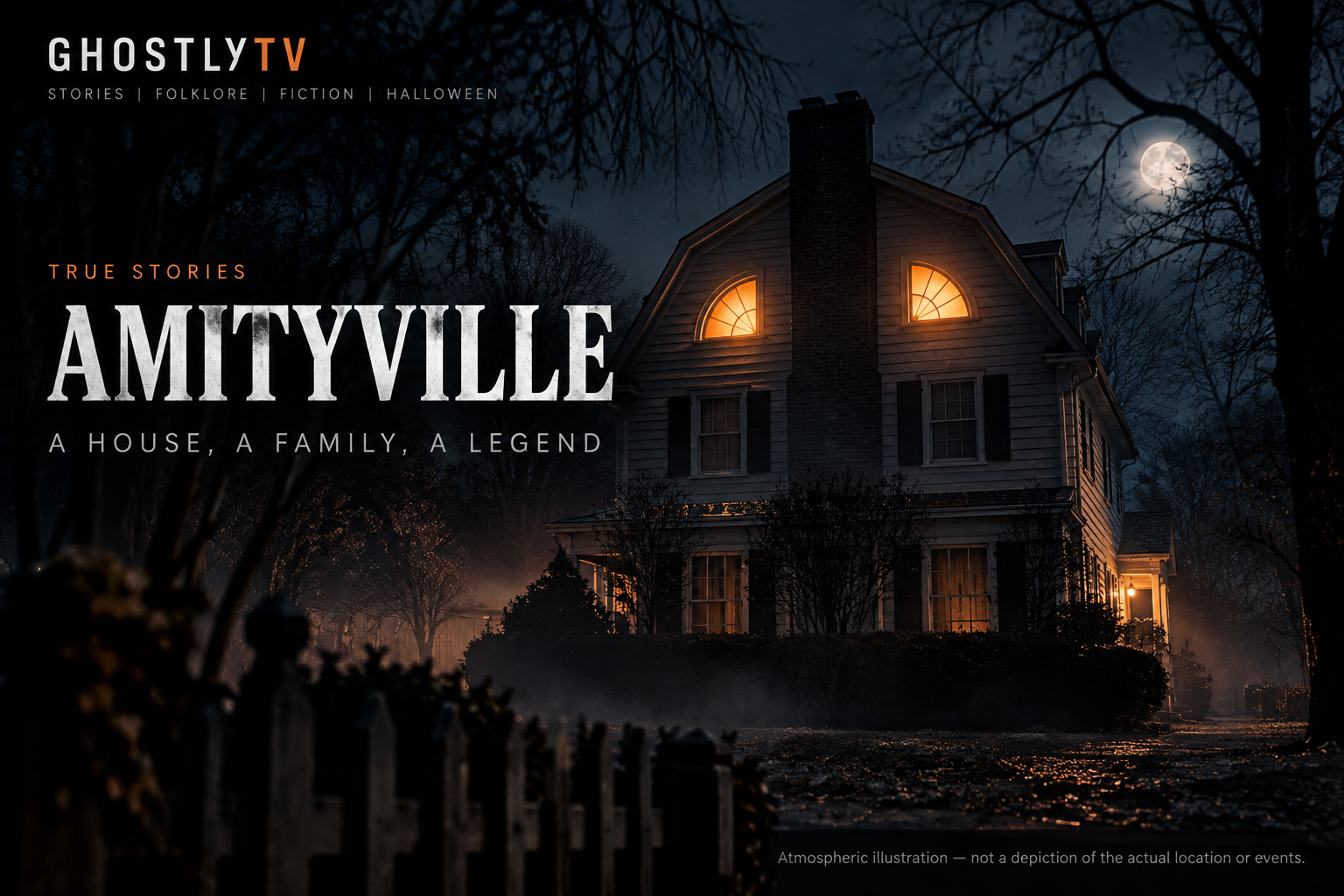
The real tragedy
On 13 November 1974, six members of the DeFeo family were killed inside their home in Amityville, on Long Island, New York.
Ronald DeFeo Jr. was subsequently convicted of murdering his parents, Ronald DeFeo Sr. and Louise DeFeo, and four of his siblings: Dawn, Allison, Marc and John.
DeFeo's defence argued insanity at his trial, but he was convicted of six counts of second-degree murder and received six consecutive sentences of 25 years to life.
Documented history
13 November 1974: Six members of the DeFeo family were killed.
1975: Ronald DeFeo Jr. was convicted of the murders.
December 1975: George and Kathy Lutz moved into the property with their family.
28 days later: The Lutz family left the house.
1977: Jay Anson's book The Amityville Horror was published.
A new family arrives
Around a year after the murders, George and Kathy Lutz purchased the property and moved in with their three children.
Their stay would be remarkably short. After 28 days, the family left the house and did not return to live there.
The Lutzes later said that they had experienced a succession of disturbing and apparently unexplained events during their time in the property.
The haunting claims
The following events come from accounts surrounding the alleged haunting. They should not be confused with independently established historical facts.
Accounts associated with the Lutz family described unusual noises, unexplained cold areas, strange odours and other disturbing phenomena inside the house.
More dramatic versions of the story included claims involving apparent levitation, mysterious substances and a creature with glowing red eyes.
These claims transformed what had already been the site of a terrible crime into one of the most recognisable alleged hauntings in popular culture.
The story becomes famous
Writer Jay Anson turned the family's account into The Amityville Horror, published in 1977. The book became a bestseller and was followed by the enormously influential 1979 film.
From there, Amityville became far larger than the original story. Sequels, remakes, documentaries and unrelated films using the Amityville name turned it into an entire branch of horror culture.
Was the haunting real?
That question has been disputed almost from the beginning. The Lutz family maintained that they experienced frightening events in the house, while critics challenged important parts of their account.
William Weber, an attorney who had represented Ronald DeFeo Jr., later claimed that he and the Lutzes had helped develop the haunting story together. George Lutz rejected the suggestion that the family's entire account was fabricated.
Subsequent owners have not reported experiences comparable with the famous Lutz account. None of this can establish what the Lutz family personally experienced, but it is an important part of the controversy surrounding the story.
History and legend
More than half a century later, the name Amityville remains almost synonymous with haunted houses.
Yet two very different stories sit underneath that reputation. One is documented and deeply tragic: six members of a family were murdered in their home. The other is the disputed paranormal story that emerged after another family moved in.
GhostlyTV keeps those stories separate. The murders are part of the historical record. The supernatural events are claims that became part of modern paranormal folklore.
A note about the house
The property is a private residence. Its historical address became widely known through contemporary reporting, books and films, and the house number was later changed. GhostlyTV does not publish its current address, directions or information intended to help visitors locate the residence. Please respect the privacy of its occupants and neighbours.